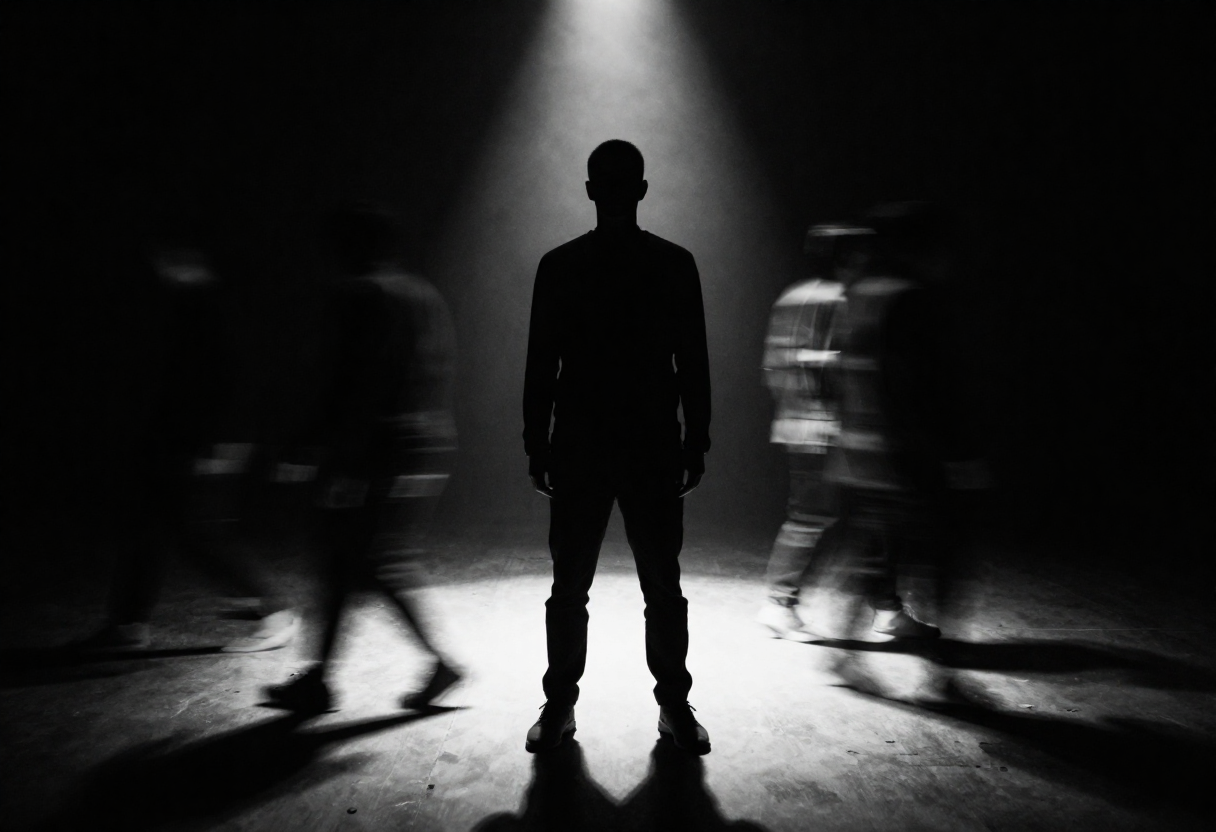
When the Jinn Leave — Why the Mind Still Feels Stuck

You’ve done the Ruqyah.
You’ve cried, released, repented, and rebuilt parts of yourself that most people wouldn’t even understand.
The affliction is gone — or at least, you know you’re no longer under its control.
But something still feels… off.
You’re no longer being manipulated by the jinn, yet your thoughts, fears, or emotional reactions still follow the same old patterns. You might find yourself second-guessing reality, expecting something bad to happen, or struggling to believe that you’re free.
And you start wondering:
“If the jinn have left, why do I still feel like this?”
The Exit Isn’t the End
When the jinn leave, their influence ends — but their footprints remain.
Think about what happens after any long-term trauma. If you’ve been gaslit, manipulated, or spiritually attacked for years, your mind learns to operate in survival mode. It adapts to protect you.
Those thought patterns don’t simply disappear with the departure of the affliction.
You’ve spent years being programmed to respond in a certain way — to distrust peace, to brace for pain, to anticipate chaos.
And because that conditioning happened over time, it takes time to undo.
Rewiring After Ruqyah
This is where many people get stuck.
They expect spiritual freedom to automatically translate into psychological clarity.
But in truth, the two are connected — not interchangeable.
When a jinn manipulates a person from childhood — whispering, distorting, confusing their emotions — it can fragment how they see themselves.
Even after deliverance, those fragmented parts don’t immediately know how to live in harmony again.
Rewiring means consciously retraining the mind to think differently.
It’s about catching the “old programming” and choosing a new response.
It’s about no longer identifying with the trauma, the fear, or the version of you that was built in survival.
Healing, at this stage, becomes less about fighting unseen enemies —
and more about reclaiming the real you that got buried underneath it all.
Assimilation vs. Transformation
Some clients ask, “Will the effects just fade over time?”
The truth is — not necessarily.
Memory blocks and mental associations don’t dissolve on their own. They sit dormant, waiting for a familiar trigger.
That’s why someone can go through Ruqyah successfully yet still struggle with intrusive thoughts, emotional detachment, or spiritual confusion years later.
Rewiring is what brings integration. It’s what helps the heart and mind assimilate what the soul already knows — that you’re safe now, that you’ve been freed, that Allah has released you from that grip.
Without this conscious process, the body can still “remember” fear even after the spirit has moved on.
Spiritual Freedom Requires Mental Renewal
Allah tells us:
“Indeed, Allah will not change the condition of a people until they change what is in themselves.” (Qur’an 13:11)
The affliction leaving is Allah changing your condition.
But renewing your thinking — that’s you doing your part.
Every time you challenge a negative belief, resist a whisper, or choose patience over panic, you’re reprogramming the pathways that once belonged to the enemy.
That’s real jihad al-nafs — the inner struggle to purify and reclaim the self.
You’re Closer Than You Think
If you’re in this phase — where you’re no longer possessed but still feel mentally bound — don’t lose hope.
You’re not regressing. You’re recalibrating.
The confusion you feel isn’t a sign of failure; it’s a sign of transition.
Healing isn’t linear. It unfolds in layers — spiritual, emotional, and psychological.
And with each layer you shed, you move closer to the version of yourself Allah always intended you to become.
You’ve already overcome the hardest part — surviving the unseen.
Now, it’s about mastering the seen: your mind, your emotions, your daily choices.
Because true freedom isn’t just when the jinn leave.
It’s when their voice no longer lives inside you.
🎧 Listen to the full episode: When the Jinn Leave — Why the Mind Still Feels Stuck
Available now on Remap Your Mind Podcast.